

Longevity Habits Core Longevity Habits Core
A nutritionist's desk from above with closed notebooks, a bowl of fruit, and a jug of water in hard noon light

Editorial standards · Maun, Botswana

Who Writes the Guidance on This Site

Longevity Habits Core publishes nutrition, sleep, energy, and healthy-ageing guidance for adults in Botswana. This page explains who writes it, how we research it, and the standards we hold ourselves to when we publish. If something here doesn't meet those standards, we want to know.

What we do

We publish practical, locally relevant guidance on balanced diets, hydration, fatigue, sleep hygiene, stress management, and long-term wellbeing. Every page is written for adults managing ordinary life in Botswana, not for athletes or clinical patients. We don't sell supplements, programs, or consultations we profit from recommending.

That last point shapes how a page gets written. Because nothing on this site is for sale, the only thing we can offer you is a clear explanation of what the evidence says and what is uncertain. When we describe a routine, we say what it involves and how long it takes; when we describe a food, we pick something you can actually buy in Maun, Francistown, or Maun. If a claim would only work in a place with a different food supply, it does not belong here.

Everyday food and habits, written for households rather than training plans.

No products, no referral links, no paid placements inside the guidance.
Who writes and reviews

Content is written by contributors with a background in nutrition, dietetics, or public health, and reviewed for accuracy before publication. We name our editorial standards rather than individual credentials because the guidance stands on its sources. If a page requires clinical expertise we don't have, we say so and direct you elsewhere.

Corrections and feedback

If you find something inaccurate, outdated, or unclear, tell us. We review corrections and update pages where the substance has changed. We'd rather publish a correction than leave a weak claim standing. Reach us through the contact page with the page name and what you noticed.

Send us a correction

How we research

We start with the national picture, not a guess

We start with national surveillance and public-health reporting on Botswana, including WHO-reported lifestyle risk-factor data for adults. That reporting tells us how many adults eat fruit and vegetables, what their salt intake looks like, how much they move, and where diet-related disease risk sits. It is a survey of the country, not of a clinic, and it is the closest thing to a baseline we have.

Where the national picture is unclear, we say that rather than filling the gap with a guess. We don't cite sources inline because our pages are written for readers, not for a bibliography, but the material traces back to published public-health reporting — and if you want to check it, write to us and we will point you at what we used.

The sources we rely on

These are the reference families behind our pages. They cover fruit and vegetable intake, salt consumption, physical activity, and diet-related disease risk — the inputs that shape what we write about food, movement, and rest in Botswana.

  • WHO-reported survey findings

    Lifestyle risk-factor data covering adult diet and activity in Botswana.

    Public health

  • National health policy documents

    The policy context around nutrition, non-communicable disease, and prevention.

    Policy

  • University nutrition research

    Studies on the local food environment and how people actually eat here.

    Research

Our limits, stated plainly

What we won't do

  • We won't diagnose, prescribe, or promise outcomes. Our pages describe habits and food, not treatment, and nothing here replaces a clinician who can examine you.

  • We won't use a health claim that isn't supported by a source we can point to. If we cannot name where a number came from, it does not get published.

  • We won't tell you a supplement is necessary when food will do the job. Ordinary ingredients you can buy locally come first, every time.

  • And we won't pretend a difficult change is easy just to keep you reading. If something takes months of small adjustments, we will say so.

Local relevance, as a rule

Every page needs at least one detail that fits Botswana specifically: a food available here, a climate reality, a market constraint, or a national policy context. Advice that would work identically in any country isn't finished yet. This is the standard we hold our own drafts to before publishing.

It also means we write about the real constraints — the cost of fresh produce in a dry month, the distance to a shop, the heat that makes an evening walk unpleasant in October. Guidance that ignores those details is not honest guidance.

Advertising and independence

This site is editorial. We don't accept payment to recommend a product, brand, or service, and we don't run sponsored content disguised as guidance. If that ever changes, it will be labelled clearly and kept separate from the editorial content. Our recommendations follow the evidence, not the advertiser.

You can hold us to that: if a page on this site ever reads like an advertisement, write to us and say so.

Questions readers ask us

Who actually writes a page here?

A contributor with a nutrition, dietetics, or public-health background drafts the page, and a second reviewer checks the claims against the sources before it goes live. The page carries the standard, not the résumé, because the guidance has to stand on what it cites.

Why don't you list a bibliography on each page?

Because the pages are written for readers rather than researchers. The material behind them comes from published public-health reporting on Botswana — WHO-reported survey findings, national policy documents, and university research on the local food environment — and we will share what we used if you ask.

Is this medical or dietetic advice for my situation?

No. The guidance is educational and general — useful context for everyday decisions about food, movement, and rest. If you are managing a diagnosed condition, taking medication, or feeding a young child, those decisions belong with a clinician who knows your history.

How quickly do you fix an error?

We read every correction that arrives and check it against our sources. Where the substance has changed or a claim no longer holds, we update the page. Where the guidance still stands, we tell you why. Either way you get an answer rather than silence.

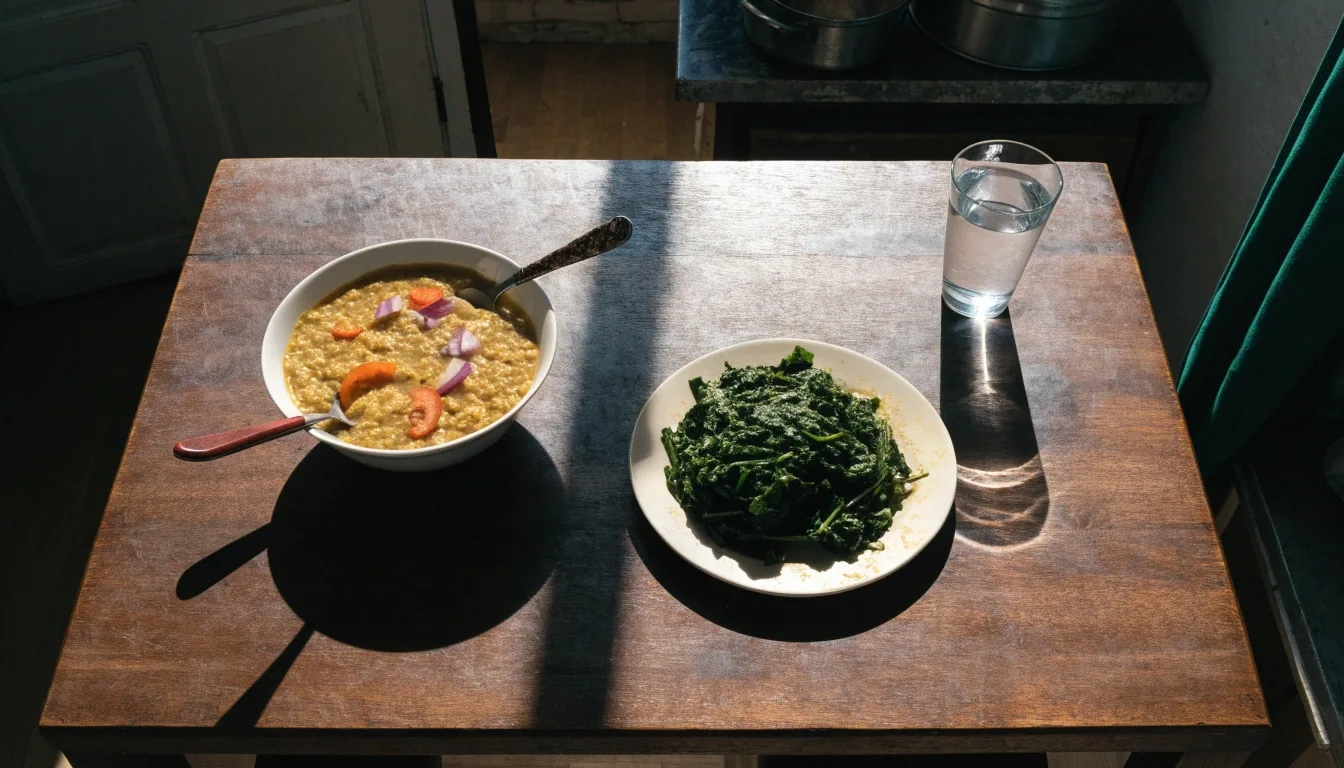
An overhead view of a shared household meal on a plain wooden table in hard noon light

Evidence-informed wellness content

Read the guidance, then tell us where it falls short

Start with the daily habits we write about most — food, water, rest, and movement — or write to the editorial team directly with a question about how a page was researched.

Office
Plot 342, Delta Business Park, Sir Seretse Khama Road, Maun
Phone
+267 686 4310
Email
[email protected]
Hours
Monday to Friday, 8:00 AM – 5:00 PM
Saturday, 9:00 AM – 1:00 PM